

On February 28, 2026, the U.S. and Israel launched surprise airstrikes in Iran. Iran retaliated with missiles and drones directed at Israel, U.S. military installations, and Gulf states with close U.S. ties. Iran also closed the Strait of Hormuz — arguably the world’s most critical energy and geoeconomic choke point.
I won’t weigh in on broader geopolitical strategy or the general gruesomeness of this situation, but financial markets’ sentiments are clear — markets do not like this. The S&P 500 is down by about 5% since Feb 27th, and the VIX volatility index is up almost 30%.
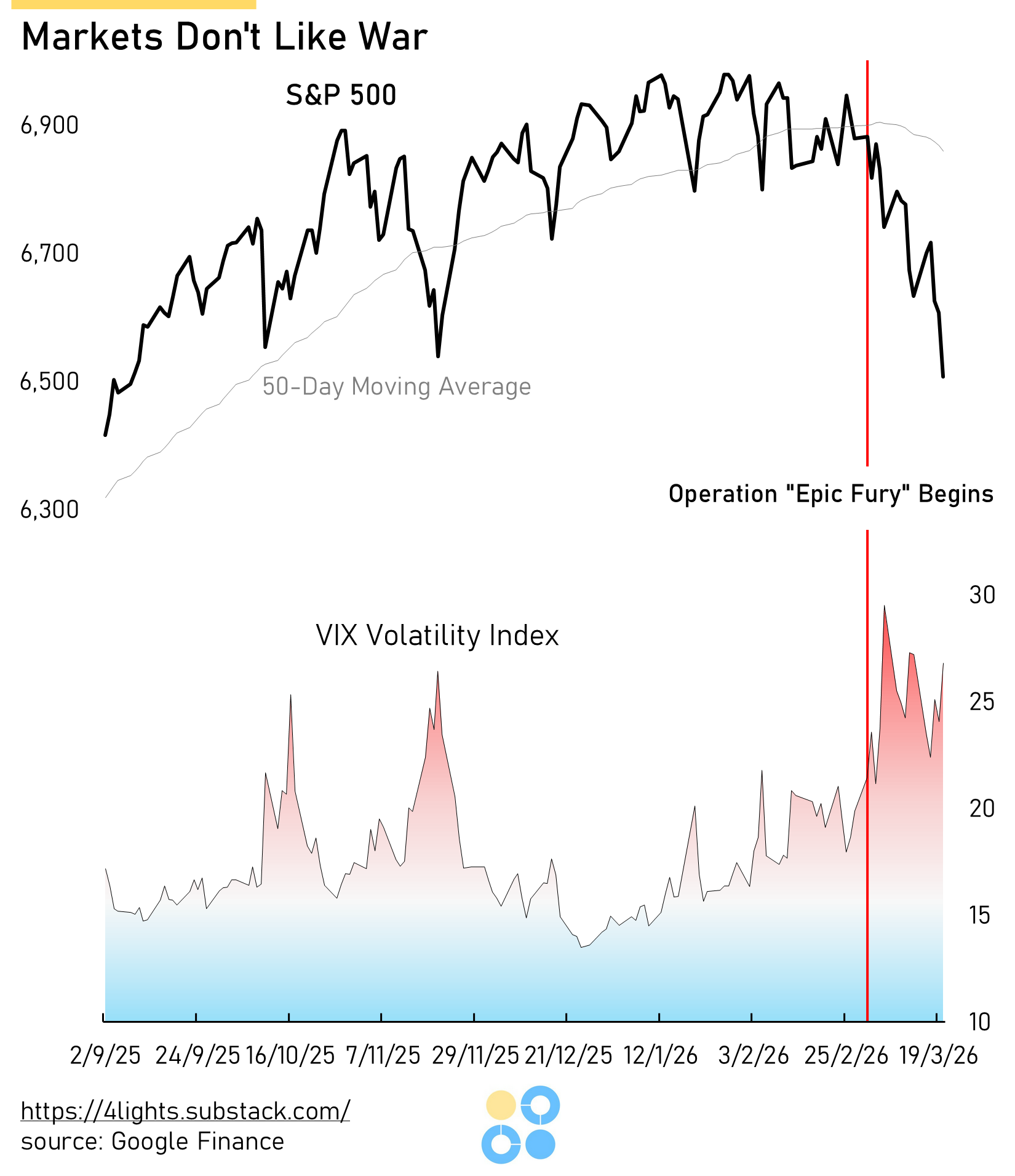
Not only are stock prices sharply down and volatility is sharply up, but so-called “safe haven” assets (U.S. government bonds) are also oddly flashing warning signs. Market yield on 10-year government bonds increased from just below 4.0% on Feb 27th to 4.4% as of Mar 20th. Gold has also fallen by about 15% since Feb 27th. In other words, assets that typically protect against stock downturns are also in freefall.