

Mean reversion is the tendency for a price (or any measurement) to drift back to its longer-run average after a sharp move away in either direction. This phenomenon shows up everywhere: stock prices, batting averages, commodities, temperatures, etc. Extreme moves in a data series are often driven by abnormal conditions (fear, hype, supply shocks) that don’t last or are self correcting.
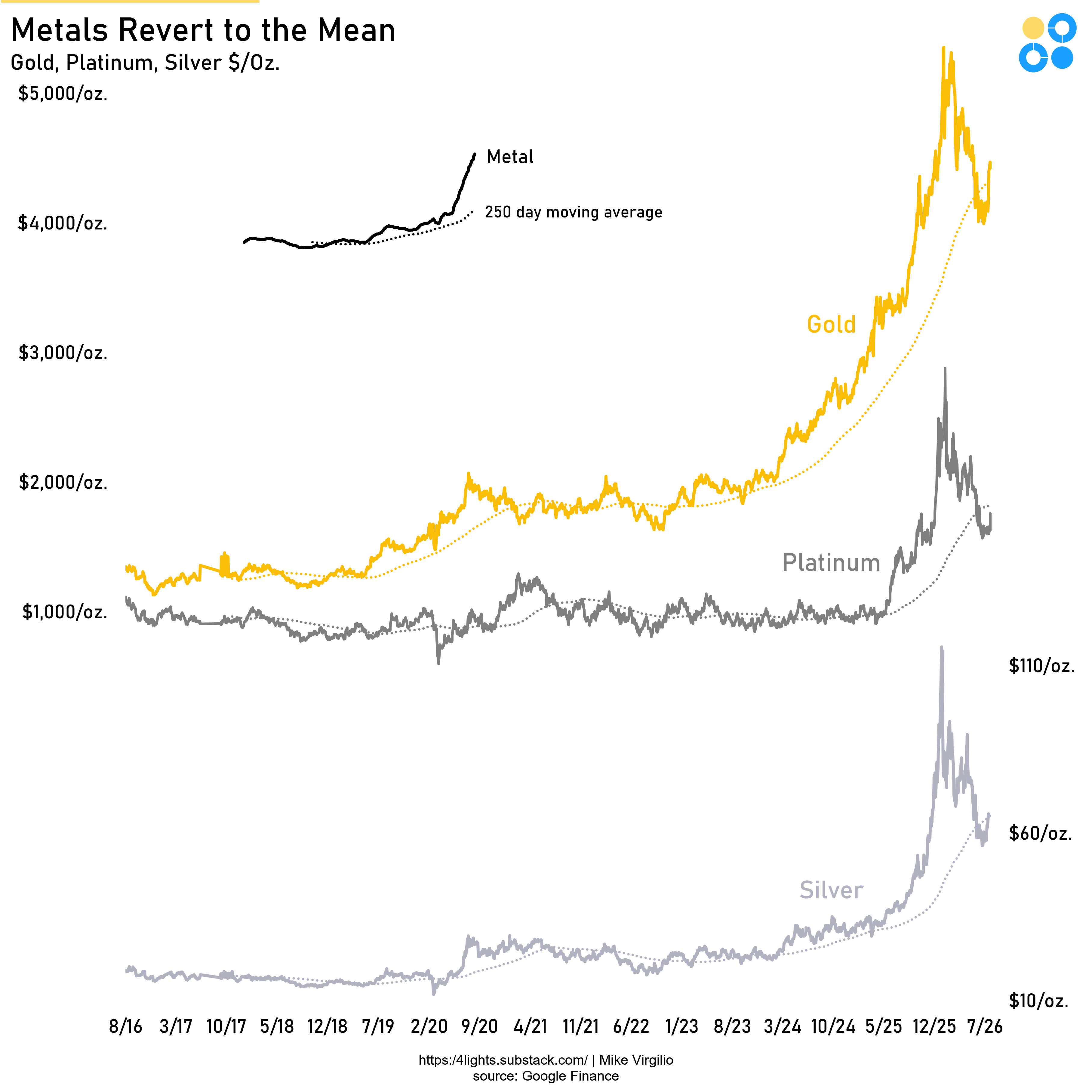
Precious metals — gold, platinum, and silver — provide a nice visual case study in how this plays out. All three blew past their long-term trends before collapsing (reverting) back to their 250-day moving-averages (mean).
These metals are a complicated story by themselves. Gold, in particular, carries a certain irreplicable1 aura: it’s part currency, part commodity, part emotional hedge against everything from inflation to geopolitical chaos, which makes its price moves as much about psychology as fundamentals. Central Bankers have been ditching US Treasuries (debt) for gold (which is a truly remarkable change).
Silver and platinum are more a story about industrialization and, yes, AI. Silver is the best conductor of electricity of any metal, and we need a lot more electricity for everything from data centers to electric vehicles. Platinum has lots of uses in industry and automobiles.
Whatever the underlying story, the pattern held up remarkably true. Parabolic moves upward tend to collapse back to longer-term averages, but, for these particular metals, the long-run price increases seem justified for good reasons.
This is not financial advice!